



By Andrew ADLER
Community Editor
For as long as I can remember, Thanksgiving was the only holiday on the secular calendar that our family celebrated with what could be termed traditional authenticity. Each November my mother would revert to something akin to the Happy Homemaker, crafting a multilayered repast for the dozen or so people who’d fill the dining room of our Upper West Side Manhattan apartment.
Among our regular guests was one of my mother’s two closest friends: Bilha Goodman, who lived two floors above us and was one of three families in our building with children approximately the same age – and who regarded one another more as blood relatives than mere unaffiliated souls.
Bilha grew up in Israel, served in the IDF and eventually found her way to the U.S., a geographical transition that did little to dampen her intrinsic qualities of self-expression. Bilhah was the quintessential Israeli: immensely proud of her heritage, passionate to the point of vehemence, and unabashedly Jewish.
She and my father had a running debate over the merits (or lack thereof) of successive Israeli governments. So, each Thanksgiving — once the platters of holiday cuisine had been reduced to an afterthought and our dining room table was rigged for battle – the spirited back-and-forth commenced.
My father, who grew up in a working-class Bronx neighborhood, was one of four children of parents who tended toward semi rigorous Orthodox Jewish observance. Bilha, on the other hand, had a more secular background. It wasn’t that she wasn’t observant – her daughter and son were Bat and Bar Mitzvahed – it was simply that religion, as such, receded in comparative relevance.
Many Thanksgivings – dozens of them, in fact – played out amid this après-poultry dynamic. Well before I could appreciate the nuances of Israeli statecraft, defined by the impetus of Knesset maneuverings and the resulting peculiarities of coalition governments, I recognized that there was a fundamental disconnect between how such processes were accomplished in the U.S. compared what went on in Israel. Both nations were democracies, but Israel’s dependence on strange alliances between radically opposing political parties was almost alien character. It wasn’t simply that Israel was a parliamentary system. What made it so distinctive, perhaps, was that it functioned under the near-constant threat of destruction.
Year after year, Bilha and my father grappled verbally in friendly yet fierce argument. I was seldom sure about precisely what they were arguing about, only that the truth likely occupied a middle ground between them. Each of them believed unreservedly in the contemporary wonder that was Israel. My father, though until late in his life had never set foot in the country, considered himself a sort of citizen by proxy. He devoured book after book about Israel’s land, its history, its culture, and above all, the exceptional resilience of its people.
Not surprisingly, Bilha made frequent trips to her homeland. At least one of her siblings lived there, so there were family bonds to be nurtured. I know that my father envied her connection and yearned to share in something that remained beyond his grasp. I believe that their vociferous exchanges over the Thanksgiving table substituted for actually being there.
For decades, my father had tried to convince my mother to accompany him on a visit to Israel, but she would have none of it. Such an excursion simply was not part of her mindset. She was proudly Jewish, but it was a cool kind of pride. Unlike her husband, who like Bilha was unabashedly Zionist in temperament and belief, she preferred to maintain a degree of distance, politically and emotionally.
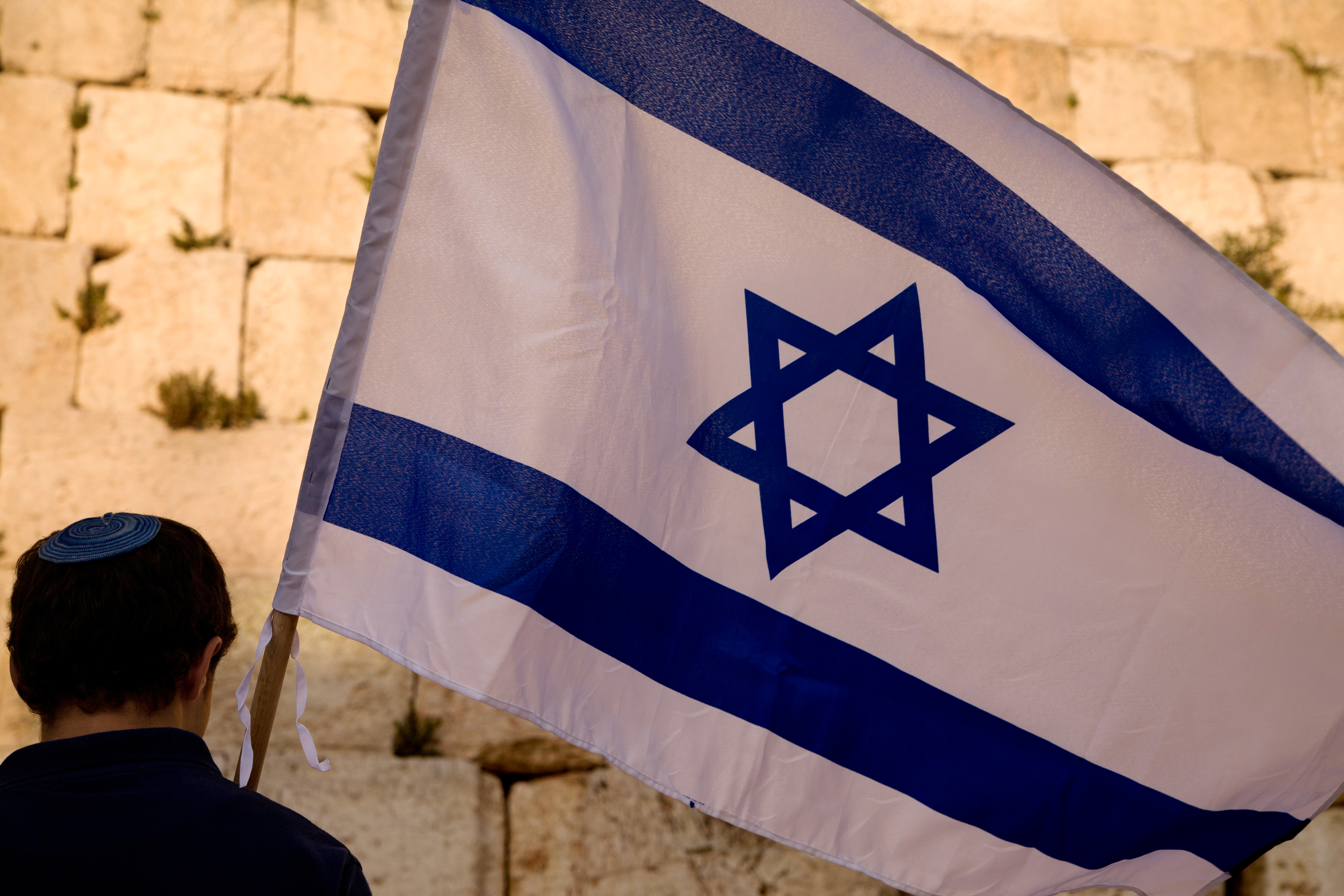
Once my father realized my mother would never travel with him to Israel, he went ahead and booked a two-week solo excursion. At the time he was about 60 with several heart attacks behind him, but nothing was going to stand in the way of him, at long last, planting his feet on the streets of Jerusalem and running his fingers along timeworn stones of the Western Wall.
He died in 1994, succumbing to cancer as I held him at home on a bright, late April morning. Thanksgiving was never the same after that. Bilha Goodman had nobody else who could muster the requisite argumentative intensity. With my father gone, all that was left was benign quietude.
Andrew Adler is Managing Editor of Community.