
By Andrew Adler
Community Editor
 What do we mean when we invoke the word, “leadership”?
Google’s AI engine came up with the following definition:
“The ability to guide, motivate, and influence others to work together towards a common goal. It involves setting a clear vision, making decisions, building trust, and empowering individuals to perform their best. While it can be a formal position, leadership is fundamentally about the actions one takes to enable a group to achieve what it couldn’t accomplish alone.”
But does this definition truly express what it means to lead, especially rising antisemitism and growing interest in participating Jews in Louisville, the nation and in Israel? Recently, we posed this question as a jumping-off point for a Zoom-based discussion among six of our Federation’s principals.
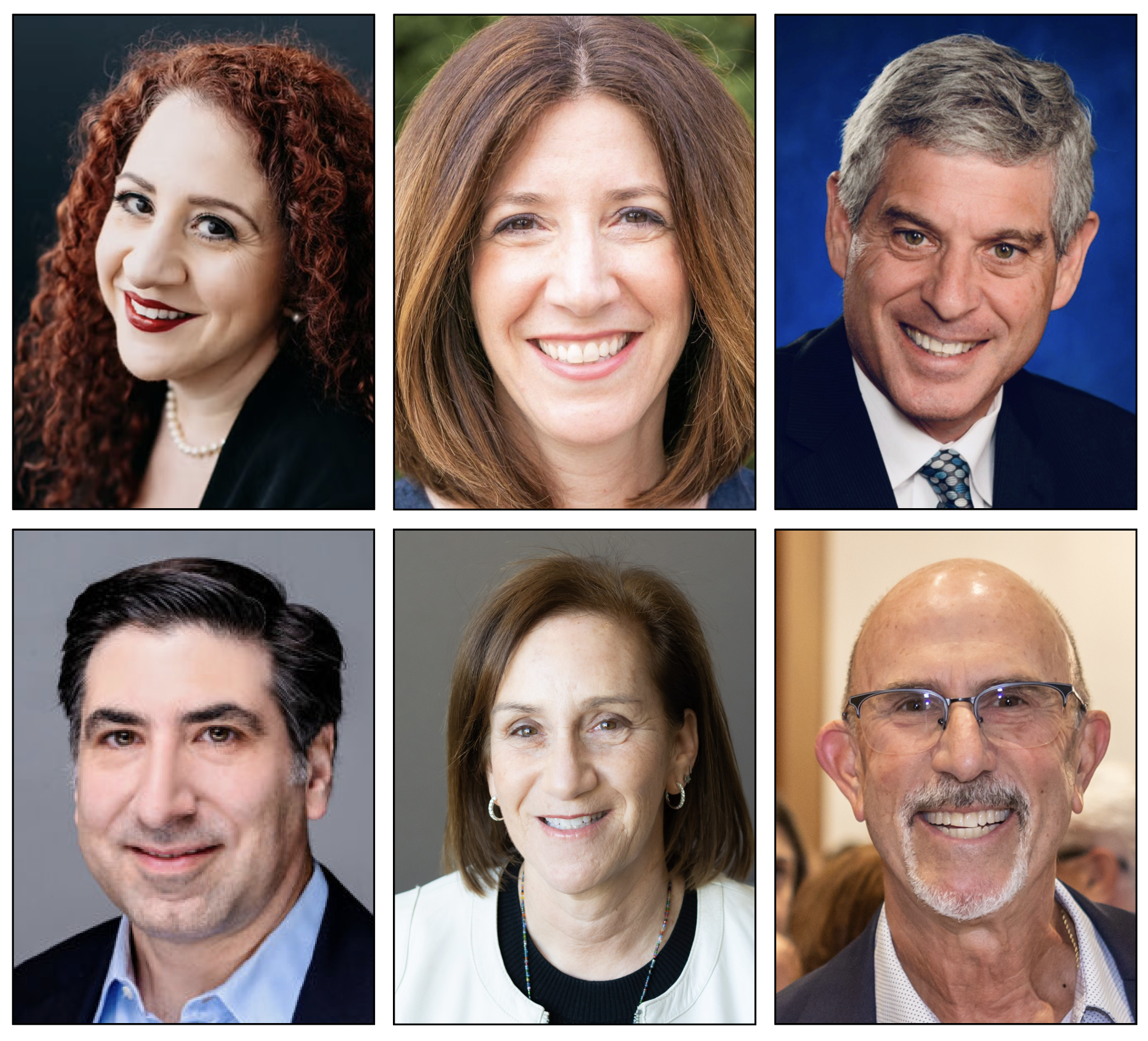
The Roundtable consisted of two separate Zoom sessions. Participants in the first were:
Ralph Green, Past chair and current JCL board member, and a member of Jewish Federation of North America’s national board.
Bill Altman, Chair of the Jewish Community Relations Council.
Corey Shapiro, Legal Director of ACLU Kentucky, Treasurer, JFCS; board member of the Jewish Federation of Louisville and the Trager Family JCC; Exec. Group member of JCRC; and board member and Policy Committee Chair, Jewish Council for Public Affairs.
Participants in the second Zoom session were:
Beth Salamon, Board Chair of the Jewish Federation of Louisville and the Trager Family JCC, and a member of the National Council of Jewish Women National Board.
Melanie Maron Pell, Chief Engagement Officer at the American Jewish Committee (AJC).
Sara Klein Wagner, President & CEO of the Jewish Federation of Louisville and the Trager Family JCC.
(Community Managing Editor Andrew Adler moderated – comments have edited for length and clarity)
So what about that notion of “leadership” — does it apply to what we’re facing right now?
Bill Altman
I think any definition of leadership has to start with context. Leadership arises in the context of the organization, or, in this case, the community, its goals, and its mechanisms to communicate and remain connected, even in the face of disagreement. Over time, leaders can help the community build the trust necessary to identify and pursue common goals. Within the Jewish community’s place in America and the world, I don’t think this definition has that much relevance. Why not? Because leadership involving setting a clear vision, making decisions and focusing on an individual’s performance is not that applicable to the times we face.
As I look at my own role as a leader within the Jewish community, what I’m focused on is making sure there is greater communication on diversity of opinions, identifying areas of agreement, and definitely building trust. So the outcome, for me at least is making sure we’re talking to one another, listening to one another – and at this stage building consensus and trust so we can come together for a common goal.
Is there something intrinsic about leadership within a specifically Jewish organization?
Melanie Pell
The beauty of the Jewish world is that we are so hyper-organized, and there are so many Jewish organizations, that whatever flavor draws you to work in the Jewish world is there is something out there for you. Whether you want to work in a synagogue or JCC or an advocacy organization, or you want to raise money, or you want to work with young people — we have all of it.
Sara Klein Wagner
I was in grad school at Brandeis working towards a Masters in Jewish Communal Service when I personally experienced what Melanie is talking about — the breadth and nuance of countless layers of Jewish life we could be a part of professionally and devote our careers to. I’ve always looked at that as a gift. I feel as though I am paying back — or paying it forward — to the Jewish community, and for what it made me, growing up in Louisville.
Beth Salamon
I have such a different experience — maybe it’s just because I’m a lay leader, and I don’t think this was ever the path I ever saw myself on. I came to Louisville and NCJW reached out to me. It wasn’t something that I had set out to do, and it was different, moving to a town with such a small Jewish community, as opposed to Philadelphia, where I grew up.
Melanie Pell
I actually stumbled into it too. I came out of law school looking for a policy role. And through a sort of happenstance, I became aware of an opening at the Chicago office of AJC. I didn’t know what AJC was. I wasn’t looking in the Jewish world, but I thought the work sounded interesting and I quickly realized, not only did I love it, but I loved the fact that it was a Jewish organization. And here I am, 25 years later: exactly where I need to be.
Ralph Green
Ultimately, though, the goal is to have a cohesive and as unified as possible, organization or community, to meet certain goals, to meet certain and to achieve certain agenda. You have to have an agenda in mind — something to lead toward.
Corey Shapiro
Skills that make us leaders in both worlds carry over. But one thing I thought of was empowering individuals. That’s really important — making sure people can communicate with each other and have difficult conversations.
The Year of Civil Discourse initiative now under way will go a long way in making that happen. Meanwhile, what about the notion of short-term vs. long-term goals?
Sara Klein Wagner
As leaders we have the responsibility and opprtunity to be able to forecast what we see coming ahead, and try our best to paint a clear picture for our community. [It may be] a program, a service, or even perhaps something that’s transformational for the community. What comes with the responsibility of being a leader is to be able to say, ‘this is where we need to go, and this is how we’re going to get there.’ And I think you have to have some futuristic feel for where we might be going if you want people to come on that journey.
Beth Salamon
One of the things that has made Louisville punch above its weight is how we’ve been innovative and forward thinking — [as in] merging the JCC and the Federation.
Melanie Pell
If you’re a lay leader, you have a finite amount of time and so need to think, ‘What can I accomplish…where can I push the ball forward and keep things moving — or is there something new we can create?’ Whereas for Sara and me as professionals where we’re in our jobs for a while, there might be a longer-term horizon – with opportunities to think big.
Bill Altman
During my career in health care, I worked a lot with nonprofit organizations in an advocacy context…I think that the process of leadership is very similar in the sense that my role within my organization, and then within the healthcare field writ large in Washington and elsewhere, was to facilitate conversations.
I agree that at some point we need to mobilize around a core set of things that we’re going to advocate for. But there’s a real difference between facilitating community conversation and allowing views to be aired — which is a goal in and of itself — and being an advocate. That’s where it gets hard. At JCRC I do make my views known, but as a facilitator, I try to withhold that. And it’s hard because I do have very strong views, so that’s where I think leadership gets challenging. And, you know, to Ralph’s point, at some point, we’ve got to mobilize around a vision. But that vision, I think, especially in these times, is being reformulated and reshaped, and it’s very uncertain what that vision is or should be in the future.
The diverse challenges of contemporary Jewish Life require leadership flexible enough to meet the demands of the moment.
Bill Altman

Bill Altman
[Within JCRC] we’ve convened — by design — an impressive group of people who have a range of views — because you sharpen your own views by having them challenged. I’ve spent a lot of my career, both in public health but also in the private sector, as an advocate — and I’m a pretty good advocate. But that’s a different role than a leader. It’s critically important for the decision-making process to be given its due, regardless of what the outcome is.
Corey Shapiro
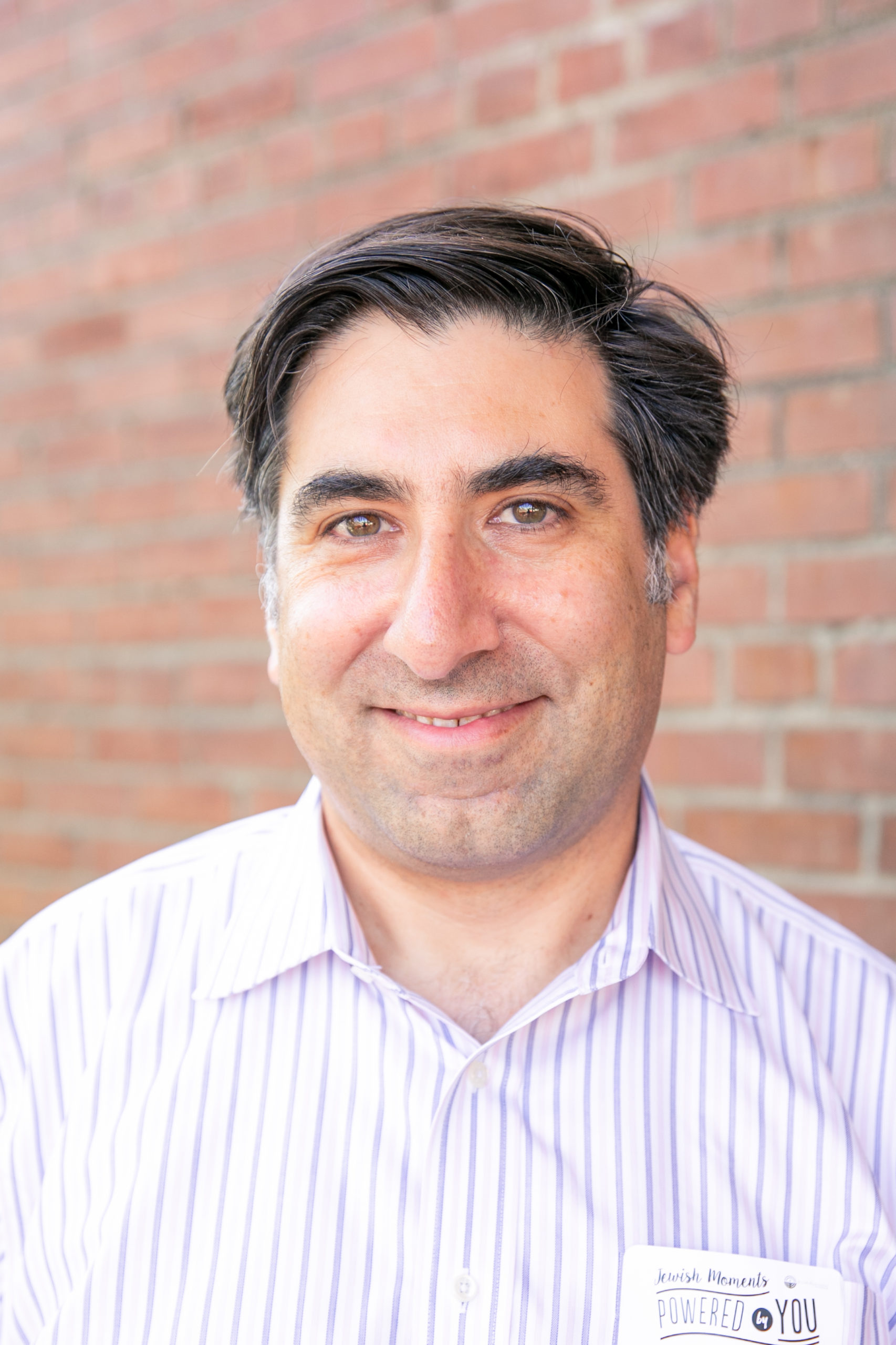
Corey Shapiro
One piece in that leadership definition that I didn’t necessarily see, which I think is important in the Jewish world, is being able to speak for those who aren’t speaking and enable others to have a voice. Sometimes there are members of the Jewish community aren’t speaking, or the Jewish community itself isn’t speaking out because we’re in crisis.
Sara Klein Wagner
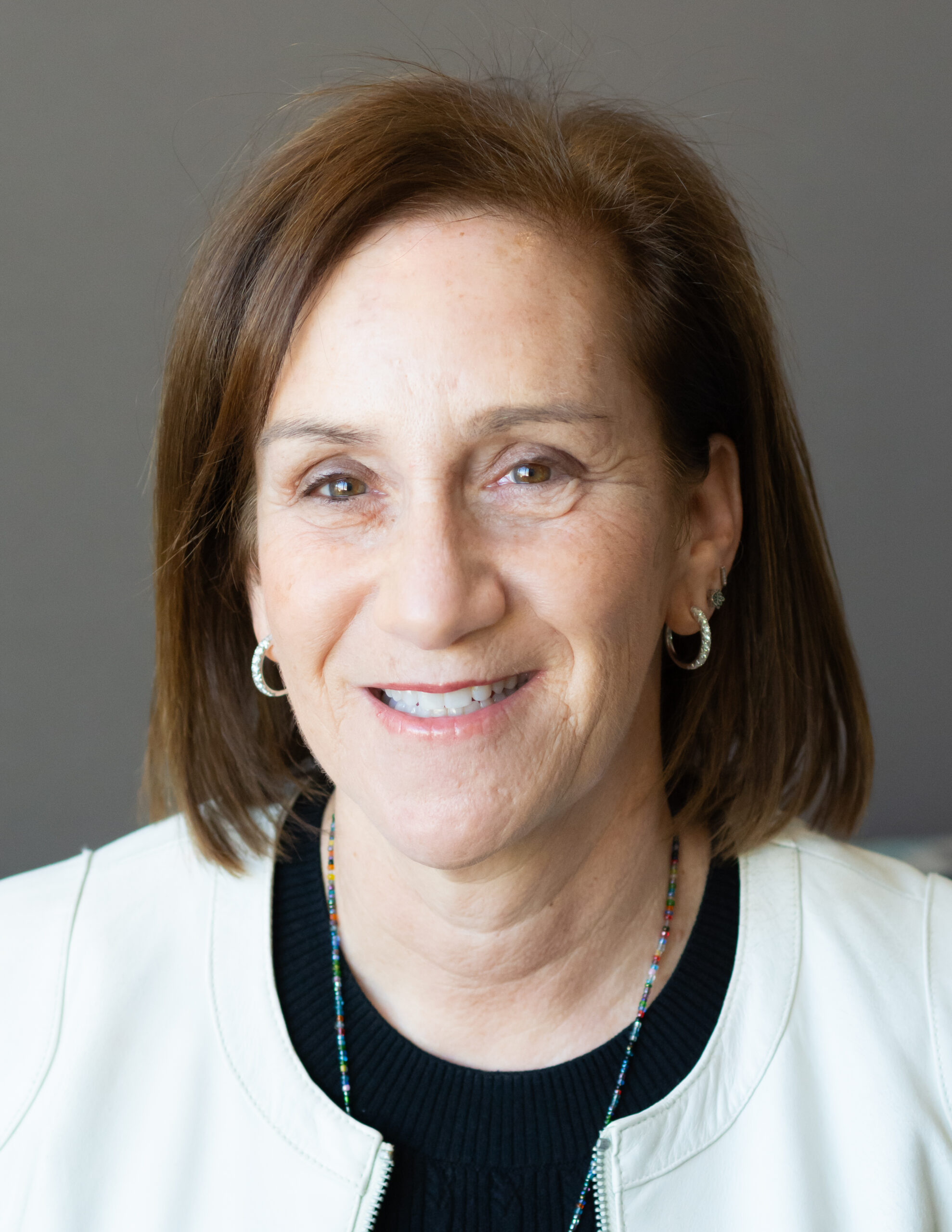
Sara Klein Wagner
Jewish learning has always emphasized healthy and meaningful debate and deeper pursuit of understanding. As Jewish leaders it is also what makes us authentically us; as demonstrated by the strong partnership between volunteer and professional leaders. We are constantly learning from each other and seeking new and more perspectives from a diverse Jewish community. We must understand the changing needs and landscape when making decisions incorporating a mix of vision, fresh new ideas, historical memory, and trends in Jewish life – here, in North America, and around the globe.
Sara, you often emphasize being in anticipatory mode.
Sara Klein Wagner
Jewish communal life is about the present and the future, about honoring and using the past to lift us up. So, if we’re only living in the present and we’re not concentrating on what is ahead, and being prepared in a proactive way, then we’re not doing our jobs.
Melanie Pell

Melanie Pell
I think that’s 100% correct, Sara. Because if we know anything, it’s that we cannot presume that what worked yesterday is going to work tomorrow. We have to be self-critical enough to recognize that it’s familiar and people may like it — but we’re not sure if we’re actually achieving anything. Sometimes it means the relationships we were relying on may have changed.
How much of this is still being filtered through the lens of October 7, the two years of war in Gaza that followed, and the concurrent surge in antisemitism worldwide?
Ralph Green

Ralph Green
October 7 was clearly a flashpoint. [It] brought out a massive amount of antisemitism that was latent but clearly there, and which is now being expressed a lot more openly — which in a sense has brought us together as a community.
[On the other hand,] actions of the Israeli government and the Israeli army have been a divisive [issue] among Jews, who, for whatever reason, have great disagreements as to what Israel should and should not be doing. And then, then there’s been an awakening of a lot of Jews who are not involved terribly concerned, but who want to be involved. We have all these dynamics going at the same time, some pushing, some pulling, and we have to figure out how to harness that to strengthen our community.
Sara Klein Wagner
One thing that comes to mind is we’re not the first people to be in leadership roles when the Jewish community is having a massive moment of change.
We’re not alone. Every Jewish community across the globe is grappling with more than one thing at the same time. The level of energy and interest in connecting with Jewish life and other Jewish people right now is stronger than we’ve seen in years. We have a responsibility to fill that need, to give people the relevant, exciting, joyful experiences that they’re looking for — and at the same time acknowledge the hole and the heartache and the confusion or uncertainty generated by what’s happening, both locally with antisemitism and across the globe, and with how Israel is going to manage ‘the day after.’ All of those things go into the pot together. That’s what a family does when a family is struggling. we are able to be together, we teach swim lessons, we learn and grow together and we mourn and grieve and we acknowledge that we are a family that has disagreements.
One might say that Jews occupy a timeline brimming with uncertainty, but also opportunity.
Bill Altman
There’s a need to recognize both institutional past and charting a [course] for the future. That’s inherent in Judaism. We survived as a people because of our attachment to this story and this history and this practice. Yet Judaism has evolved from the destruction of the Second Temple through the history of our people. That’s unique: not discarding the past, but recognizing that times change. I think we are at that juncture right now. We’re in a discovery process of figuring out how we’re going to chart a path forward.
Melanie Pell
“Our lay leaders are saying, ‘Put me in, coach — the world is nuts and I want to think I’m making a difference. Tell me what to do; give me something where I can take the reins.’ We have all these people who are so eager to help and to do good.
Can we match that energy with the right kind of opportunity, so that we’re meeting the needs of individual lay leaders — and creating something great.”
Beth Salamon

Beth Salamon
“It’s hard…finding someone who has the capacity, but also the talent and confidence. Because I’ve talked to people who’ll say things like, ‘Oh, I don’t think I could do that.’ So you have to make people believe they can really lead, and give them the tools to learn how.”