

By Michelle Elisburg, M.D.
Guest Columnist
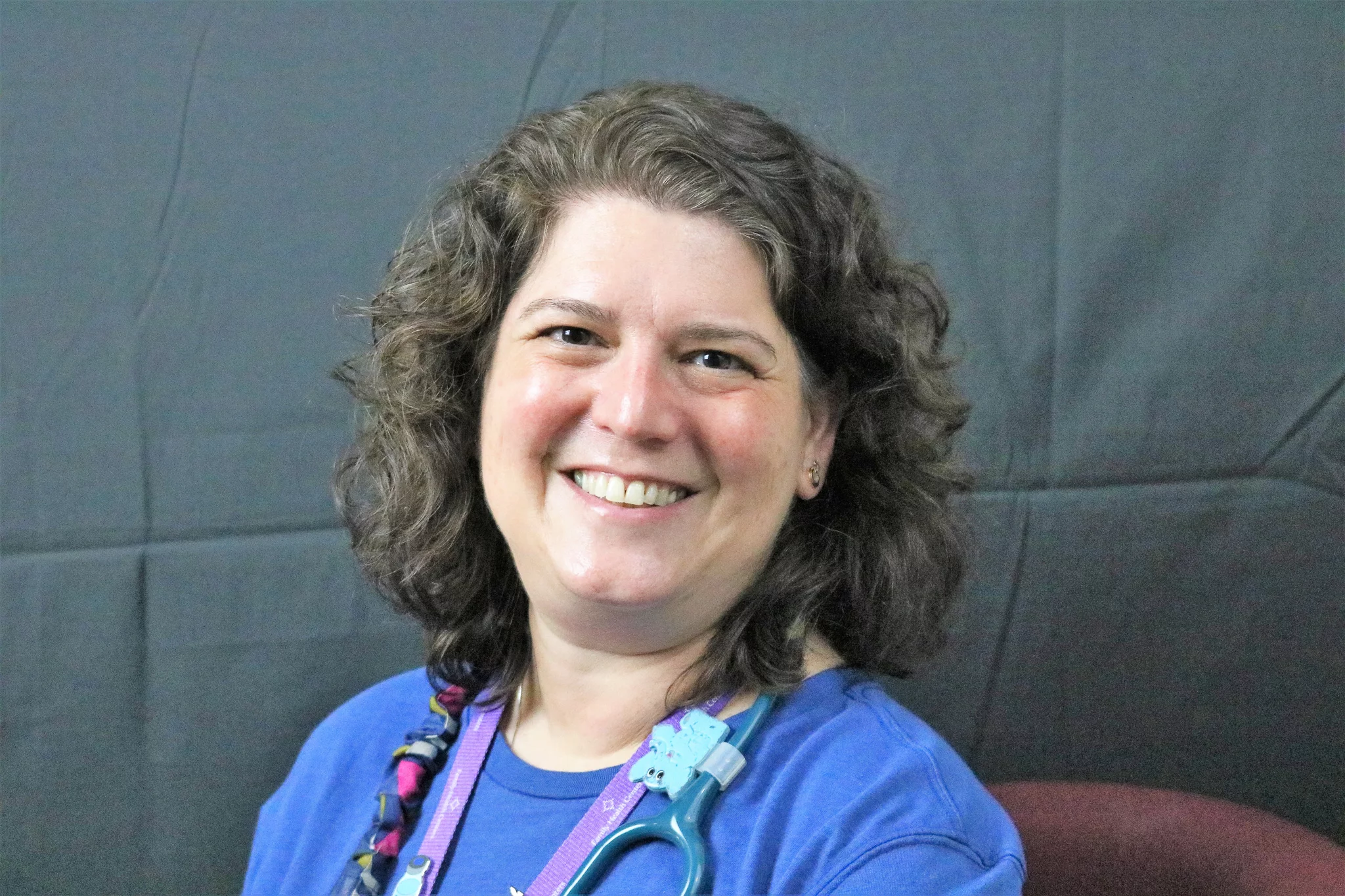
Michelle Elisburg, M.D.
The following originally appeared as a guest blog in the January 27, 2026 edition of The Times of Israel.
During this past Thanksgiving, my mother and I went to my parents’ storeroom looking for my father’s archive of work papers. What I found instead, in a dusty box full of old photos and certificates, was something unexpected — the program from my 1999 University of North Carolina medical school graduation.
On the program’s back page was something even more unexpected: Not only was there the well-known Hippocratic Oath to “First, do no harm,” but also a second one, the Oath of Maimonides. In this oath by the Jewish medieval philosopher, physician and scholar, a physician promises to “never see in a patient anything but a fellow creature in pain.” I don’t remember taking both oaths, which is remarkable considering that, as a Jewish physician, I now quote Maimonides on a regular basis.
As the hostility towards Jews and Israel in the medical community has grown exponentially since October 7, 2023, many physicians and other medical professionals, in discussion forums, use the Hippocratic Oath to justify discriminating against Jews and Israelis. They cite the phrase “Do no harm” when indiscriminately criticizing the harm caused to Palestinian colleagues and patients while trivializing the same harm caused to Jewish and Israeli counterparts.
When I and other Jewish doctors advocated for the hostages or commented on our trauma, we were accused of violating our Hippocratic Oath, because we must be okay with killing Gazan children. The irony was not lost on those of us who experienced zero empathy for the Israeli children killed, kidnapped and traumatized.
Over the past two years, there has been an alarming increase in antisemitism in the healthcare field. More than double the amount of healthcare professionals report experiencing some form of antisemitism in social media, their workplace or medical school, or in professional publications, since October 7, 2023.
Those in the medical field are known to hold themselves to a higher standard that prohibits discrimination and hatred. It makes the activism of medical students against Israel especially troubling. During the first year after the war started, I received multiple requests to sign petitions from medical students advocating a boycott of Israel, condemning Israeli actions but never mentioning Hamas and their violations. These students demonstrated such disdain that it inevitably led to a hostile learning environment for the Jewish students.
I read these one-dimensional and biased petitions as sentinel harbingers of how impossible it would be for these activists to treat Jewish and Israeli patients respectfully. I consider myself an activist for many issues. But my activism does not require me to dehumanize others in order to raise up another. But now, there seems to be a deficiency in the medical ethics and humanitarian values that demand we treat all patients equally.
When I was in medical school, it was expected that we would treat patients we might not like. Like a Yankee in a North Carolina Court (with apologies to Mark Twain), I remember being shocked when a patient in the Emergency Room made some racist comment and looked at me like I would agree with him. I had to figure out how to treat the patient despite his bigotry while demonstrating that I did not feel the same way.
I worry what kind of selective compassion today’s medical students will have when they become the medical professionals of tomorrow if they feel they can pick and choose who is worthy of treatment using a litmus test of their personal political beliefs.
When I think of medical ethics, I subconsciously return to a scene from a novel I read as a young adult, which still haunts me. It is from Herman Wouk’s World War II novel War and Remembrance. A doctor on the battlefield has to decide whether to keep alive a gravely wounded Japanese general. She chooses to insist on medical treatment because her duty is to preserve life, regardless of nationality or wartime context.
I have not heard this moral dilemma discussed in the contemporary treatment of all war patients. An entire Instagram account, Physicians Against Antisemitism, is dedicated to exposing medical professionals who publicly post their hatred and ill will towards Jews, Zionists and Israelis. I appreciate that it is difficult, but our profession demands that we treat all patients equally. Despite all the hate and criticism Israelis endure, their doctors still model the tenets of our medical oaths.
At the Hadassah Medical Organization’s two research and treatment hospitals in Jerusalem, Hadassah Hospital Ein Kerem and Hadassah Hospital Mount Scopus, and other Israeli hospitals, politics are left at the door. All staff, whether Jewish, Arab, Christian, Druze, Muslim or anything else, work together as partners to treat all patients to the highest medical standards, even when it backfires.
Yahya Sinwar, the architect of the October 7 massacre, was an Israeli prisoner serving four life sentences when Israeli doctors removed a malignant brain tumor, saving his life.
Another betrayal occurred after a Palestinian woman, Wafa al-Baus, received extensive life-saving medical treatment for severe burns. On one of her follow-up visits, she attempted to smuggle a bomb into the hospital with the intention of detonating it in a crowded area. And yet, it is Israel that some medical students vilify. Will their activism and protests make the Jewish medical students afraid to speak up?
I am worried about the treatment of patients who reveal their Jewish identity and beliefs to doctors who value only one side of a complicated political story. There are, for example, certain genetic conditions that must be tested for, which could be missed if Jewish patients keep their identity a secret for fear that their doctors will be biased against them.
I worry about new physicians supporting calls to boycott Israeli medical research. In 2024, UN Special Rapporteur Francesca Albanese urged medical professionals globally to sever ties with Israel.
Hadassah and the American Jewish Medical Association (AJMA) collaborated on a letter to the UN condemning this unethical boycott that would harm patients in Israel and around the world. Israel is a global leader in many areas of health and research and shares her innovations with any country in need. Israel’s medical teams are one of the first on the ground, responding to disasters all over the globe, lending knowledge and expertise to save all lives. Just recently, Israel shared trauma advice with colleagues in Sydney, Australia, following the massacre at Bondi Beach to help their colleagues deal with its aftermath.
Will new physicians really want more kids to need epinephrine auto-injectors (EPI) pens because they don’t want to heed the evidence from an Israeli research study that suggests decreasing the prevalence of peanut allergies by making Bamba (a peanut-flavored food from maize) the first food for babies?
Will they follow Irish pediatricians who demanded a boycott of Teva Pharmaceuticals, a major supplier of global generics, simply because it is an Israeli company?
Will they reproduce the social media videos by Italian medical staff throwing away Israeli-manufactured medicines as a protest?
I channel Hersh Goldberg-Polin, who told a fellow hostage, “If you have a why, you can find your way.” My “why” is to stop antisemitism in the medical professions to ensure that future physicians learn true compassion and medical ethics. My “how” is teaching every student that I precept to treat every patient with dignity and respect and to adhere to our medical ethics. Jewish or not, they learn how we are all created b’tzelem Elohim (in God’s image), and that pikuach nefesh (saving a life) is to save the world.
My “what” is the please speak up as I do. “For the sake of Zion, I will not be silent” (Isaiah 62:1). Join the Hadassah Physicians Council and the AJMA to support their legislative and advocacy work to protect Jewish patients and professionals. Be a role model and return medicine to its homeostasis of respect and dignity for all people.
Fundamentally, when you don the white coat and stethoscope, you must hold yourself to the ethics of your oath and, like at Hadassah’s hospitals, the rule is to leave politics at the door!
Michelle Elisburg is a Louisville pediatrician and president of the Louisville chapter of Haddassah.