

By Rabbi Matt Derenbacher
Guest Columnist
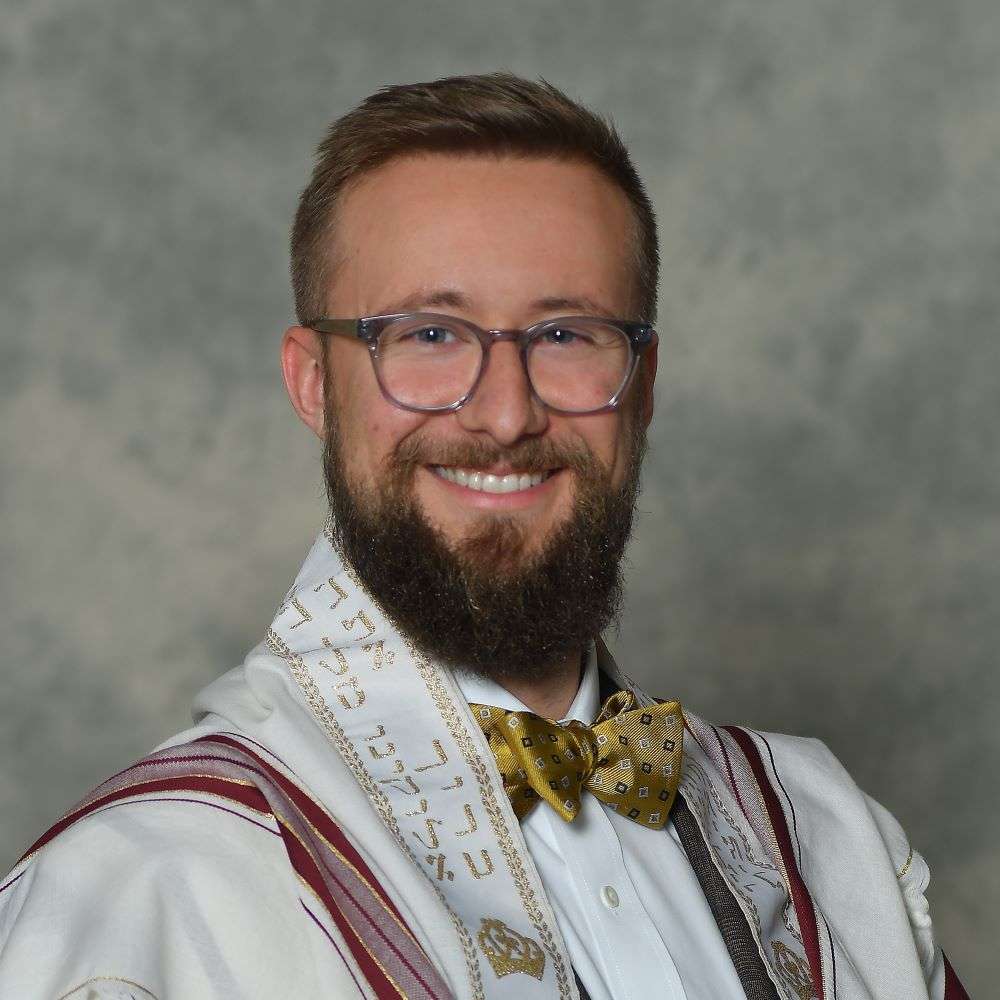
Rabbi Matt Derrenbacher
At the beginning of August, I had the privilege of traveling to Israel for a rabbinic seminar hosted by Hebrew Union College and the Daniel Centers for Progressive Judaism in Tel Aviv. Over several days, we engaged with Israeli rabbis, scholars, journalists, and politicians, each offering perspectives on the seismic changes of the past two years – both before and after October 7th, and their hope and ideas for a new way forward in Israeli society. As I prepared for the trip, my heart was a tangle of emotions: awe at returning, dread at the heaviness I imagined permeating Israeli society, and joy at setting foot once more in a land I love deeply, despite its complexities. Yet one essential element seemed absent at the outset: optimism. In the face of such painful realities, tangible hope for the future felt out of reach.
My first Shabbat there fell on the eve of Tisha B’Av, a day of mourning on our calendar. That night, I stood for the first time in Hostage Square. Families of hostages spoke with heartbreaking urgency – pleading for their loved ones’ release and crying out against a war that has already inflicted so much devastation on both the people of Israel and the people of Gaza. Their anguish was followed by the chanting of Megillat Eicha, the Book of Lamentations, merging a ritual of ancient grief with the lamentations of our own time. A week later, my trip ended with another protest – this time on Tu B’Av, the holiday of love. Even on that day, voices of anguish rose. Spouses and partners of hostages pleaded to be reunited with their loved ones and for the war to end. Their powerful words were a stark reminder that love and suffering, yearning and despair, so often walk hand in hand.
And yet, the moment that lingers most for me didn’t come from the incredible insights from the seminar or the protests, but in a quiet conversation with a friend who lives outside Tel Aviv. As we talked, she told me, “For such a long time, I felt profoundly alone. I have no government to represent me. I have no country to represent me. So really, what am I?” The heaviness of her words permeated the air. After a pause, she continued: “But over time, I discovered that I am not alone. So many Israelis feel the same way I do. I may not have a government that represents me, but I know I am not alone. My people are hurting, just as I am.” What began in despair turned, unexpectedly, to solidarity and resilience. And in that solidarity, I felt a welling up of hope and optimism – fragile, but palpable. It was a reminder that hope is not born in isolation; it emerges in the presence of others who share the burden of our pain and the real possibility of our future.
That lesson is not only for Israel. It speaks directly to us here in the Diaspora, too. When the Jewish people are in pain, whether in Tel Aviv or Louisville, none of us is truly alone. We are bound together across oceans, borders, and time by memory, responsibility, and hope. Just as my friend found strength in realizing her struggle was shared, so too can we find strength in knowing that our prayers, our actions, and our solidarity ripple outward, helping to carry one another through.
Holding those layers of awe, dread, joy, and hope, I found myself thinking of the High Holy Days. That moment in Tel Aviv felt like what I have always longed for these Days of Awe to embody: challenging, raw, and yet infused with the promise of renewal. This year, I will carry that moment with me as the foundation of my High Holy Day journey.
As the season approaches, the shofar will soon sound – its piercing cry both ancient and urgently current. At Sinai, it accompanied the giving of the Torah (Exodus 19). For Isaiah and Hosea, it was a call to return to God. For Ezekiel, it was a warning of danger (Ezekiel 33). And in the Writings, the shofar proclaimed triumph and coronation, celebration and song (I Kings 1; Psalm 98). The voice of the shofar contains the fullness of the Jewish experience: awe and revelation, dread and warning, the call to return, and the joy of celebration. Each note invites us to confront the complexity of our lives and the world, and to discover what role we might play in shaping both.
This year, when I hear the voice of the shofar, I will be carrying with me the awe and hope of Israel. And I invite you to do the same: to hold close one moment, or a constellation of moments, that acknowledges life’s complexity but also anchors us in hope. Not a naïve hope, but one rooted in solidarity and connection. Not a passive hope, but one embodied in action. A hope that pursues peace. A hope that is grounded, deeply, in love.
May this New Year grant us the courage to face complexity, the strength to pursue peace, and the blessing of hope in connection with one another.
Matt Derrenbacher is Assistant Rabbi at The Temple.