


By Andrew Adler
Community Editor
If you spot two young women striding through the Trager Family JCC with the energy and purpose characteristic of late teenagerhood while exchanging sentences in rapid-fire Hebrew, there’s a good chance you’ve encountered our latest pair of Israeli ShinShinim: Yarden and Tamari.
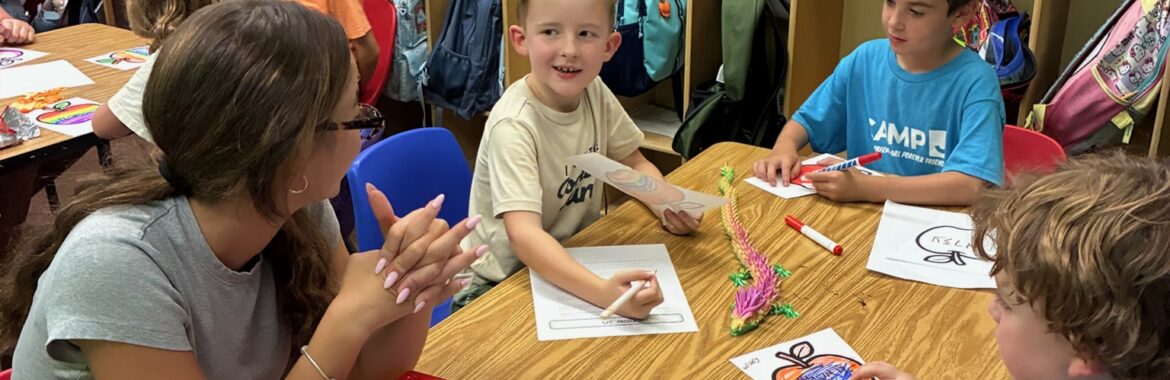
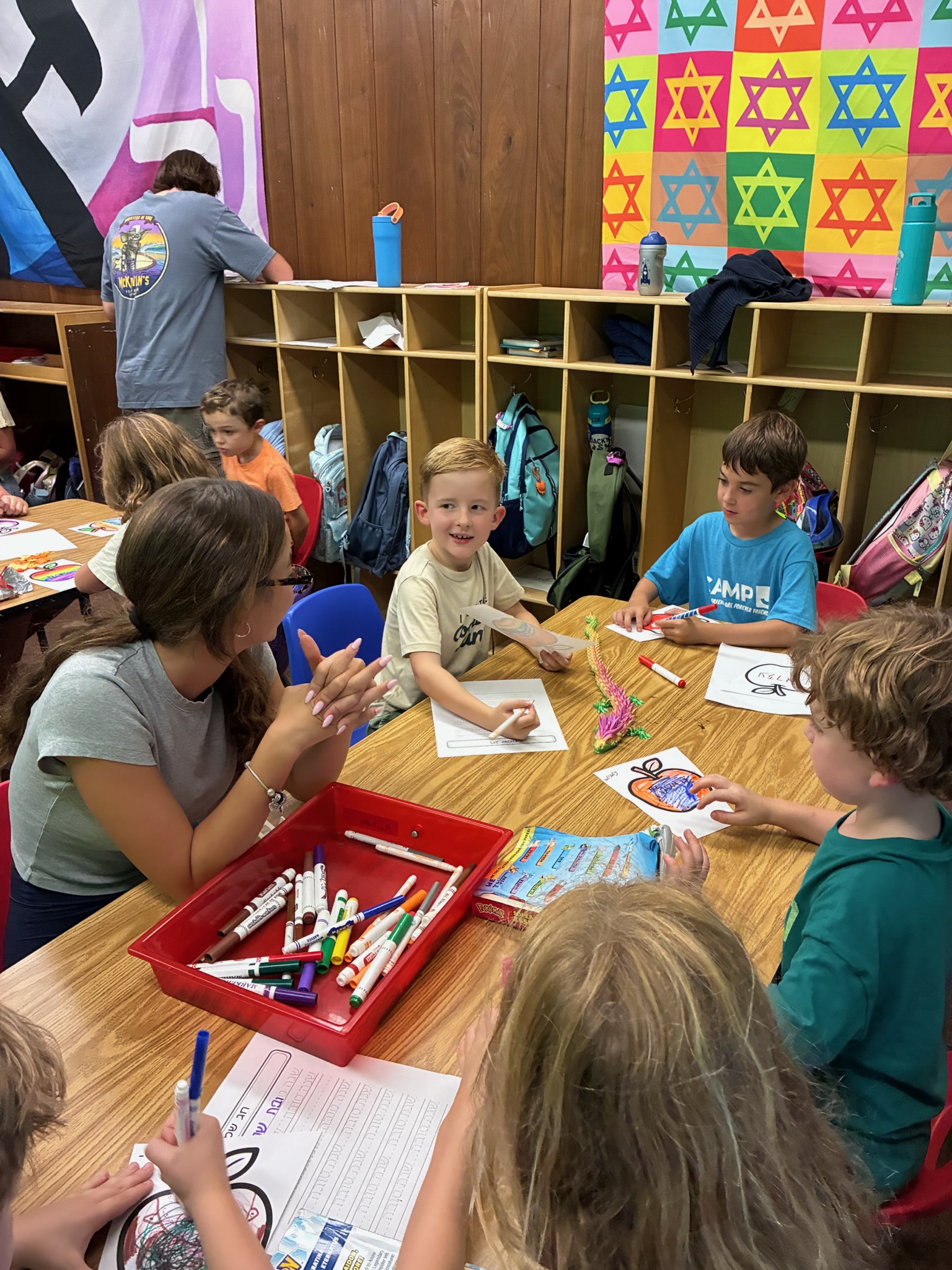
ShinShinim – Hebrew for “emissaries” – is a 12-month Jewish Agency for Israel (JAFI) program for teens taking a gap year between the end of high school and their mandatory two years of national service. Yarden and Tamari (for security reasons they go by first names only) are the third such duo to spend a year in Louisville. During their time here these 18-year-olds will work with students in all the area Jewish preschools and both religious schools, host events for members and guests, and go out into the community sharing their perspectives as young Israelis.
Alison Pohn Roemer, who oversees the ShinShinim program for the Trager Family JCC and the Jewish Federation of Louisville, explained that out of thousands of teens who apply in Israel, “only the best are selected for interviews” for placement in North America and Europe.
“Each year Louisville has interviewed at least six candidates, selecting the two we feel will make the greatest impact on our community, while having complimentary personalities,” Roemer said. “Yarden comes from a small town so coming to Louisville felt like a good fit. Tamari went to a reformic school in Israel, which is unusual, and which made her a great candidate for our connection with the Reform Temples in our area.”
Both ShinShinim have also participated in the Diller Teen Fellows initiative, in which – according to a Diller overview — “an exceptional group of Jewish 10th and 11th graders is selected to participate in the shared experience of” a year-long program “designed to cultivate and connect an emerging generation of leaders in 32 communities around the world.”
“Both of my older sisters did the program before me,” said Yarden, one of four daughters in a family who lives in southern Israel. Diller provided her with an opportunity to appreciate the contrasts between growing up in Israel and the U.S.
“We found that they were very different from us,” Yarden recalled, comparing the American participants’ predominantly Reform Judaism practice to her own Orthodox religious practice, which is the norm for most Israelis.
“Their Jewish identity is different from our Jewish identity,” she said, recounting a conversation she had one Shabbat with her new American friends. “I feel I’m a Jew because I live in Israel, speak Hebrew and do Jewish holidays. They feel Jewish because they do bar and bat mitzvah and keep Shabbat. But it was fun to talk to them and share how I feel, and hear how different they are from us. It opened up new worlds for me.”
Like Yarden, Tamari – who hails from northern Israel near Haifa — had an older sister’s Diller experience to draw from. “We learned about different movements in Judaism, and that you can be anything you want to be. You’d have 20 kids – and one of them might be keeping Shabbat, one might be keeping Kosher, and one might have none of that. And we still can sit together and be friends.”
Growing up in a Reform environment has given Tamari a distinctively eclectic perspective on faith and friendship. “My school believes in connections with schools all over the world,” she said, “in Germany, Australia, and the United States.”
During her 9th grade year, she was part of a delegation that visited Germany, where English became the lingua franca among teens of differing backgrounds and practices.
Such experiences have much in common with the ShinShinim program, where participants live with host families and – in their free time – “love the same things, like going to the mall and doing other teenager stuff.”
Because the ShinShinim program is so competitive, it takes a special degree of commitment to be chosen. “There are two tryouts,” Yarden said, with the first tryout being the more challenging. Then, after passing the initial hurdles, candidates must be successfully matched with a host community. “They keep in mind what’s going to be best for you,” she said.
Initially, Yarden tried out for a slot either in Miami, Toronto or London. For the Miami spot, she was one of six teens vying for two available openings. Florida, however, was not to be – Federation representatives there chose someone else.
“I was thinking, ‘Okay, maybe I’m not going to do this; maybe I’m not going to get any other community.’ Then I got an email saying we’re going to do an interview with Louisville, Kentucky – where there were also six people trying for two places. I said to myself: ‘I hope I do better than I did last time.’ And I got accepted.”
Tamari and Yarden have another experience in common: Both were active in Tzofim, Israel’s vaunted Hebrew Scouts Movement for youth age 9 through 18. Founded in 1919, Tzofim emphasizes egalitarian camper autonomy, encouraging participants to devise their own programs while solving problems along the way.
“In scouts I learned things I’d never learn in my school,” Tamari said, “about how we’re building a safe place, and about leadership. Talking about service in the army and gap years were things I got from Tzofim. Last year I had the opportunity to teach teenagers how to lead a group.”
She told about how, during various summers, her parents visited her at camp – and that every time her mother observed her proudly independent daughter, mom would say; ‘I’m in shock, because this is a city kid.’”
“If you ask me about an activity I did in school, I can’t name even one,” Yarden said. “But if you ask about an activity I did as a kid seven years ago, I could tell you specifically what we did there,” because “it was the best way to make the information stay in my brain forever.”
Like Diller, Tzofim proved an exceptionally valuable precursor to participating as ShinShinim. “I knew I wanted to do some kind of a gap year,” Yarden said, recalling how several ShinShinim alums acted as Tzofim counsellors. “Three years ago my sister did it in Miami, and I remember FaceTiming her every week, when she’d tell me about the amazing stuff she did, and I was like: ‘Okay, that’s what I want to do.’ So, in 11th grade on the first day you could sign up, I did.”
All prospective Shinshnim must demonstrate proficiency in English, and show they can be comfortable speaking in front of an audience. Once selected, Yarden and Tamari followed the favored protocol of summoning up Google Maps to plumb clues about these places called “Louisville” and “Kentucky.”
“We open Google Maps and we’re walking around (virtually) the city, and seeing pictures, but it’s not like a big city with malls and tall buildings,” Yarden said. “It’s farms and horses.”
Informed that was more likely Lexington than Louisville, these ShinShinim are embracing their new environment with undisguised fervor.
Or as Yarden put it: “I was like: ‘Oh my G-d – I’m going to live the actual American experience, not the shiny American experience.’”