


By Andrew Adler
Community Editor
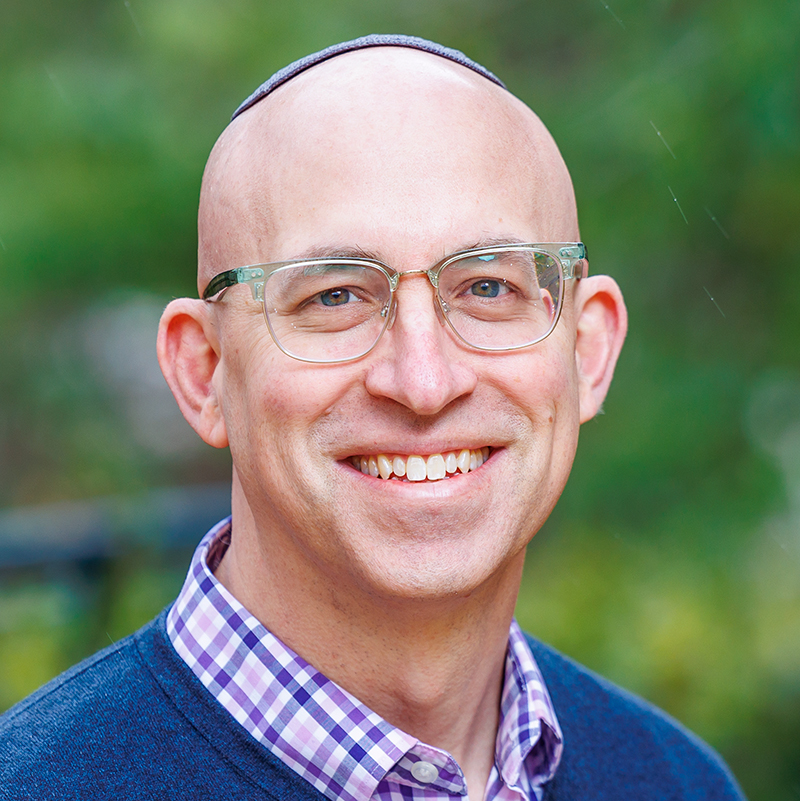
Yehuda Kurtzer, President of the Shalom Hartman Institute
There are few commentators on Jewish issues more insightful or prolific than Dr. Yehuda Kurtzer. As president of the Shalom Hartman Institute, he occupies the fertile (and often fraught) foreground of conversation about the U.S.’s relationship with Israel and the broader landscape of American Judaism.
Attributes such as these make Kurtzer an ideal advocate of how we modulate such discussions, and why he’s coming to Louisville as part of the ongoing Year of Civil Discourse initiative. His visit is being made possible in part by the Jewish Heritage Fund.
On Wednesday, Nov. 18 from 7-9 p.m. at Keneseth Israel, Kurtzer will be the featured guest at a community-wide forum titled Our Fragile Big Tent: Rethinking Community and Boundaries for a Divisive Age. It will provide an opportunity to explore our evolving relationship with Israel, the different ways we understand Jewish identity and belonging, where communities draw boundaries, and how we create meaningful space for disagreement without allowing those differences to sever our relationships.
During his time here, Kurtzer will participate in two additional public programs: a community Torah study, The Foundations of Jewish Pluralism, Nov. 18 from 9:30 a.m.-12 p.m. at The Temple; plus Jewish Power and Jewish Vulnerability, a teen program, on Nov. 17 from 5-7 p.m. at the Trager Family JCC.
He will also lead two sessions on Nov. 19 for boards and staff of Jewish organizations.
As these sessions will likely reveal, Kurtzer knows full well the pitfalls of conflict and assumptions, especially when the subject is Israel. But that doesn’t mean abdicating a responsibility to take stands on what matters.
“It should not be an obstacle for American Jews to have opinions,” he emphasized during a Zoom interview from his office on Manhattan’s Upper West Side. He was speaking on the afternoon of October 7, the third anniversary of Hamas’s murderous attack on southern Israel.
“Many times, Israelis have pushed back and said, ‘Well, you don’t live here, you don’t serve in the military, so you don’t get to have opinions about what’s going on here.’” Kurtzer said. “And I’m like, ‘nonsense. I have a lot of opinions about things I really don’t know anything about. That’s actually what it means to be human.’”
Here Kurtzer, 49, is being a bit disingenuous. He knows plenty about Israel, not surprising for a fellow who grew up in Tel Aviv (as well as Silver Spring, Maryland). His father is Daniel Kurtzer, who served as the U.S. ambassador to Egypt from 1997-2001 and as ambassador to Israel from 2001-2005.
“This is apropos of coming to Louisville and talking about civil discourse,” Yehuda Kurtzer said. “It’s very bad for a public conversation to start with, ‘Who is the authorized speaker?’ and for everyone to have to demonstrate all of their bona fides and all of their loyalties to be able to enter into a conversation. That’s not how humans are. I can feel pain and I can be angry about something happening halfway around the world, even if I’m not fully qualified to speak about all the dimensions of that story. It already sometimes is an obstacle between Americans and Israelis, but the fact that it’s becoming an obstacle in our own communities is a self-inflicted wound.”
Facilitating civil discourse is a core imperative at the Shalom Hartman Institute, which was founded in 1976 by David Hartman and remains based in Jerusalem. Kurtzer is president alongside Donniel Hartman, the founder’s son. (Its North America division has an especially wide portfolio – Sara Labaton, the Institute’s Director of Teaching and Learning, spoke at the Trager Family JCC in March of 2023.)
Opinions, Kurtzer maintains, can be victim of their own weight. Someone might say: “‘So-and-so who has opinions that I think are wrong about Israel – I think they’re wrong on the facts, and they haven’t spent time there, and haven’t done this and that.’ That person may still feel immense pain or passion for the position they are taking, and no amount of condescension is going to make them concede.”
Indeed, “it’s hard enough when we’re building bridges between Israelis and Americans, but it’s even worse when we use these kinds of hierarchies to destroy the relationships we have with one another.”
“The institute has been committed to pluralism since its founding,” Kurtzer emphasized, “and I feel it takes two very different forms that reinforce each other. One is a belief system about humans and the power of human diversity. Judaism invites us to consider the possibility of not holding on to absolute truth. That it’s a way of believing in a God of complexities and multivocalities — a set of behaviors and practices that we think are vital for living within liberal free societies.”
The Hartman Institute functions not only as a kind of think tank, but as an incubator for deescalating the tumult of polarized identity politics.
“One of the gifts of working in a research center like ours, which prioritizes collaboration on hard issues, is that I get environments to test out ideas and practice them with people who disagree with me,” a process that encourages him to “test my assumptions,” Kurtzer said. He also hosts a weekly podcast, Identity/Crisis, where – its description reads – he “talks with leading thinkers to unpack current events affecting Jewish communities in North America, Israel, and around the world, revealing the core Jewish values underlying issues that matter most to you.”
Kurtzer, who did his undergraduate work at Columbia University before earning a master’s at Brown and a Ph.D. at Harvard, is author of the 2012 book Shuva: The Future of the Jewish Past. You can sample more of his writing via his prolific active Substack platform, though he cautions against the potential perils of consuming too much social media.
“The algorithm is going to incentivize certainty, dogmatism, and inflammatory rhetoric,” Kurtzer said. “It’s also going to incentivize name calling, and you have to decide that you’re going to get a bit less traffic, but that you’re going to feel better about yourself if you don’t engage in those habits.”
Whether on social media or in the wild, “if you build societies that are intolerant of difference, you will wind up with authoritarian states,” Kurtzer said. “You will wind up with a suppression of yourself. You think that you’re winning in the short term, and you’re ultimately losing the long term. So you have to start accommodating yourself to building a world in which difference is valued, as opposed to being considered a threat.”
This, Kurtzer stresses, is a defining principle, “that runs through everything that we do,” even if putting it into practice risks confounding certain constituents – at least in the short term.
“Sometimes that gets people tripped up because they’ll say, ‘But you also hold to other beliefs like the legitimacy of the state of Israel.’ The answer is, there are no pluralists who don’t also have strong commitments.”
The key is: “How do they express those commitments,” Kurtzer said. “Do you demonize your opponents ideologically? Do you have things that you won’t even entertain or think about in terms of your differences? Do you approach your own truths as 100% truths, or – ‘I’m pretty sure I know that I’m right, but I leave open some epistemological humility about the possibility that I’m wrong.’”
At Hartman, the latter alternative holds sway.
“That, both as an ideology and its disposition, is vital to the institute, and it’s why I like doing things like this project in Louisville,” Kurtzer said, “building community through substance.”
Here Kurtzer invoked a metaphor illustrating the difference between arbitrary stabs at truth and genuine, extended dedication.
“We have to start thinking about pluralism, dialogue, civic participation – all these things – the way we think about exercise,” he said. “If you think having an intense session in the gym once a year is going to improve your physical conditioning – well, what’s going to happen is you’ll feel severe pain after that one experience, and you’ll have made no real change in yourself.” But “if you think these as regular habits that we have to engage in and practice, you will see improvement.”
The Year of Civil Discourse, which centers on facilitated, small discussion groups called Dialogue Circles, exemplifies Kurtzer’s point.
“Louisville’s community has structured this in the right way,” he said. “It is bringing in partners who are doing this kind of habit-forming work. This is how we should talk, and then bringing in people like me not to do that habit-forming work, but to (address) big issues of substance where we have disagreement.
“I would hope that this is not my ‘annual gym session,’ but that it actually resets some norms and habits.”
With ever-greater frequency, we’re observing a precipitous “decline in all sorts of rituals of civic behavior,” Kurtzer said, “like neighborhood block parties and bowling clubs, and all these things that were the organic way Americans humanized each other and insisted that they held more in common than their political beliefs. Those behaviors have all eroded, and we know a lot of the reasons why.”
Looking ahead, a Dialogue Circle participant might consider “what it would be like for me after this experience to invite people who go to a different congregation for a Shabbat dinner, where we’re not scared to talk about some of the issues that divide us. We have to start building better pluralism muscle memory.”
Call it a matter of discussion and discourse, not dissonance — evolving into a covenant grounded in mutual discernment and respect. Or as Kurtzer puts it: “A useful way of hedging our own certainty.”
“You don’t want to just talk about how we talk,” he acknowledged. “It’s trying to model a new norm on the issues we care about. Are there technologies in how we speak, and are there behaviors and practices in how we choose to talk to each other – that help to build the fiber of a better linked, more compassionate Jewish community.”
To register for any of Yehuda Kurtzer’s upcoming Louisville programs, or for Dialogue Circles slated for Nov. 9, 11, 15 and 30; and Dec. 2-3, go online at tinyurl.com/4xe38d4w. You can listen to his podcast, Identity/Crisis, at tinyurl.com/544p95nh, and read his Substack posts at yehudakurtzer.substack.com.