


By Andrew Adler
Community Editor
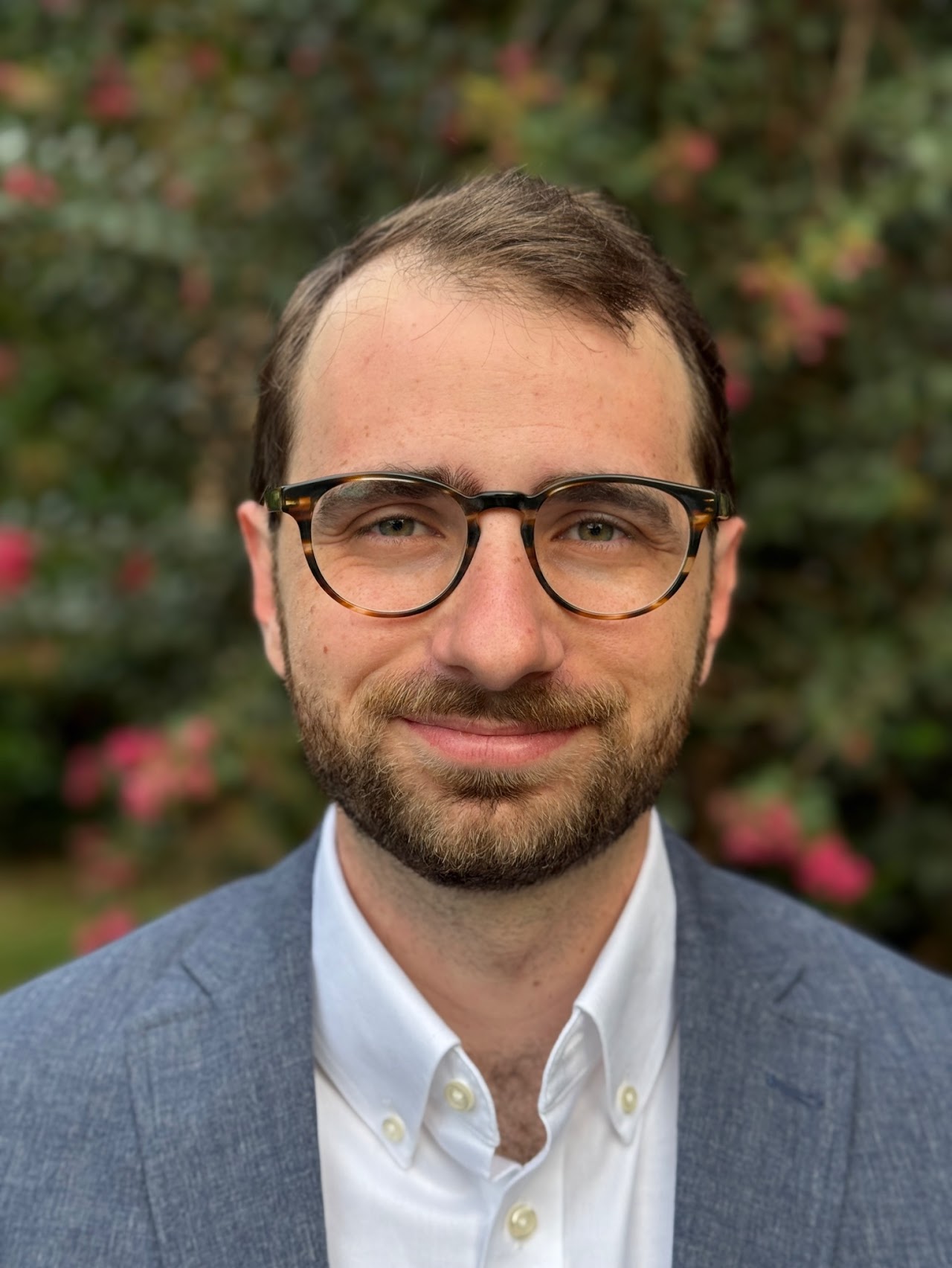
Michael A. Portal (Photo provided)
The University of Louisville’s Philosophy Department recently gained a new assistant professor. So did UofL’s Jewish Studies program.
They are the same person: Michael A. Portal.
“My position is a little bit peculiar,” acknowledges Portal, a 30-year-old newly minted PhD out of Texas A&M University who recently moved to Louisville from his native Houston. He directs the Jewish Life & Learning Initiative at UofL, funded in part by the Jewish Heritage Fund.
“This effort will expand Jewish academic offerings, strengthen student life, and build meaningful connections between the university and the broader Louisville community,” said JHF Program Director Jaime Jorrisch.
“At its core, the initiative is about ensuring Jewish students feel welcomed, safe, and a true sense of belonging on campus, while also opening the door for all students to engage with Jewish thought and culture in meaningful ways,” Jorrisch added. “Now more than ever, investing in Jewish scholarship and student belonging is a vital step toward a campus and community rooted in connection and respect.”
Portal is also tasked with being a principal liaison to UofL’s branch of Hillel, and with organizing and presenting events aimed not only at the general public, but at Jewish Louisvillians seeking ways to reclaim fundamentals of their faith and culture.
“Some will be readings; some will have speakers, or conferences in food,” he says. “Right now, I’m trying to figure out what people want, and who’s being addressed by current needs. The idea is to get to people who are not currently affiliated, who are not showing up at events.”
And just because an event is held at UofL doesn’t mean that it’s somehow restricted. Portal’s imperative is inclusion, not isolation.
“The university is not just for students,” he emphasizes. “The university is for the city. That’s how I’m going to interpret this job.”
His new, hybrid position is grounded in outreach, “to meet everybody and build bridges,” he said. Meanwhile, he’s found a place to live in Old Louisville and expresses wonderment at encountering genuinely excellent pastrami.
“Michael brings with him a tremendous record of robust scholarship as well as energy,” says Ranen Omer-Sherman, JHFE Endowed Chair in Judaic Studies, Professor of Comparative Humanities, and English –who directs UofL’s Jewish Studies program.
“He has wasted no time getting to know the surrounding community and has already made warm connections with his students, Hillel of Louisville, and the campus community at large,” Omer-Sherman says. “In the world of Jewish Studies he is already establishing a strong reputation for his critical work on Jewish and French/francophone philosophy and he’s currently writing a book on phenomenology and Jewish messianism.”
Among the various candidates interviewed for the Life & Learning position, Portal’s enthusiasm for Hillel was evident from the start.
“He very much wants to help us grow Hillel on campus,” says Liz Hemmer, Hillel Program Manager at the Jewish Federation of Louisville. “We want to have a (place) for these students – whether we meet a couple of times a month or once a month for five minutes, Jewish or just Jewish-curious – to tell students that even though you’re away from home, we want to build a community for you.”
Because Portal’s appointment is largely concerned with programming, his teaching load is lighter than is typical for a junior faculty member. This term he is teaching a course on the philosophy of religion, ranging from the 17th-century’s René Descartes to France’s Jean-Luc Nancy, who died in 2021. In the spring he’ll pivot to leading a class on Holocaust studies, taking over from Mark Blum, a longtime UofL history professor who died this past January.
“I have a teaching reduction because the Jewish Heritage Fund brought me out,” Portal explains. “Typically, in my position you have three courses in the fall and two in the spring – and now I have only one in the fall. It’s an honors course with some very interesting and engaged students. So, I’m learning a lot and they’re learning a lot.” “Over the last several years I spent a lot of time thinking about Jewish community and outreach,” Portal said. “I received a Fulbright grant to study the Jewish community of Antwerp in Belgium. That work had me going from the ‘academy’ into the community trying to understand how things work. I mean, Jewish thought is not just an academic discipline. It’s a way of life.”
Though Portal’s academic base is UofL’s philosophy department, “I work closely with comparative humanities and the Jewish studies minor – so it’s interdepartmental, interdisciplinary work. That’s how I was trained; that’s how I grew up.”
The only child of high-achieving parents (his mother is a pediatric ear, nose and throat surgeon; his French-born father trained as a nuclear engineer), Portal earned his undergraduate degree in Philosophy and Policy Studies from Houston’s Rice University.
“My favorite joke is that I’m the downwardly mobile son,” he quips, observing that landing a tenure-track position in his decidedly un-STEM field counts as a kind of professional miracle. “My parents are getting an enormous amount of mileage out of this,” he acknowledges. “Because how often does a philosopher son get a job?”
Reared amid a background of Reform Judaism, Portal recalls growing up in an environment that encouraged all manner of inquiry. “We had a really interesting and diverse community,” he says, “and I benefitted from that community.”
Perhaps inevitably, his innate curiosity led to various stages of re-consideration.
“I remember thinking for many years that philosophy and religious studies had to have a kind of gap – a gulf separating them,” he says. “Then I realized that wasn’t tenable, which is when my research took off. I realized the necessity of a conversation or dialogue between the two. That’s what drew me to some of the texts I’ve assigned to my students and the work I’m doing now.”
All too often, Portal believes, “it seems as if we can’t speak with one another, to think there’s no possible conversation. The conversation is cut short before it’s even begun. It’s a monologue instead of a dialogue.”
Welcome to the intersection of faith and skepticism. Fundamentally, “What I love about Judaism is that it’s very much committed to asking questions,” he emphasizes. “We have to learn how to ask questions, and to tolerate the fact that there might not be answers. It’s a problem I learned from Judaism, and which I impart into philosophy.”