



By Andrew Adler
Community Editor
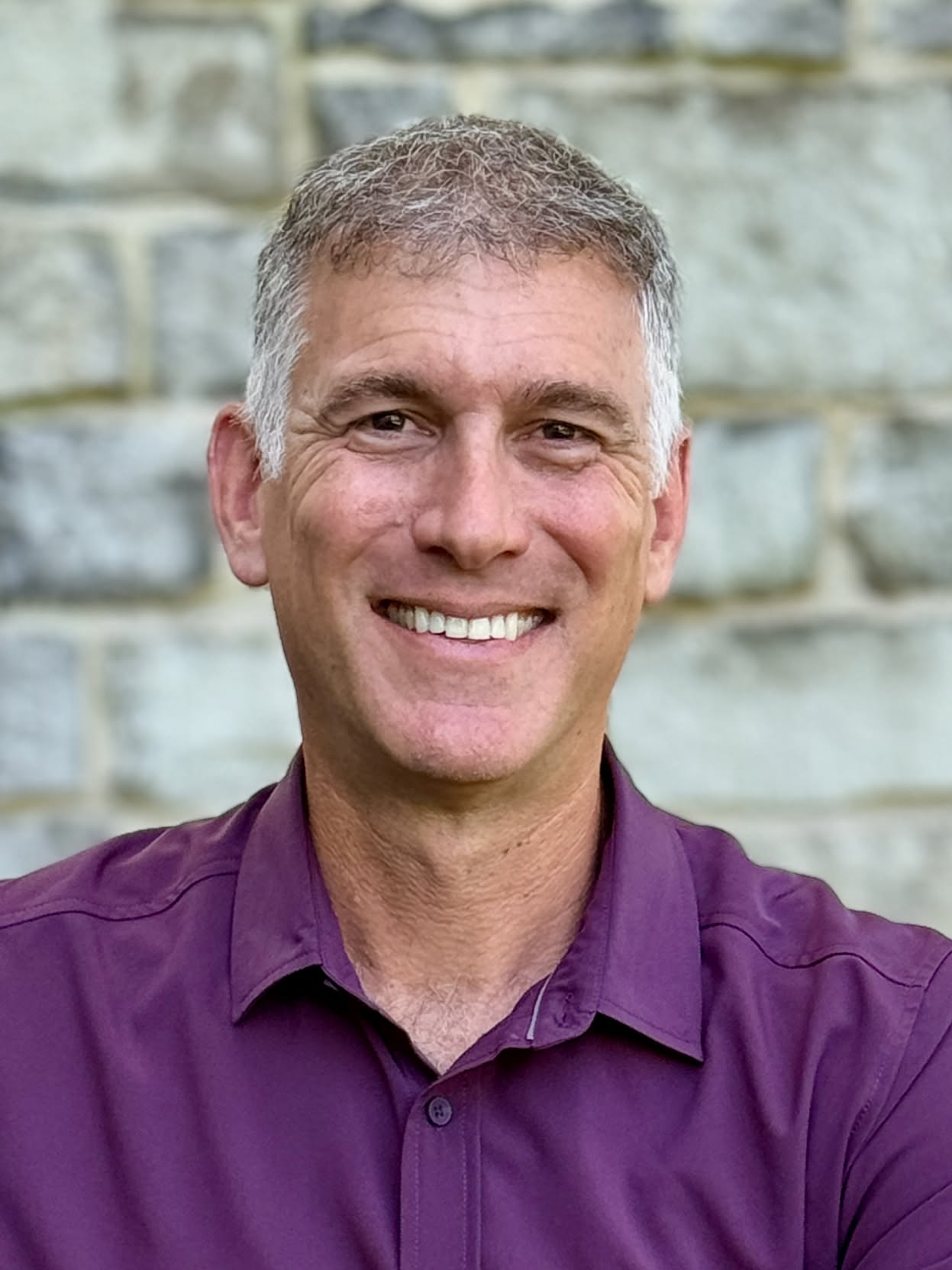
Louisville psychiatrist David Roth
Psychiatrist David Roth has a story to tell. It’s a story about the intersection of depression, profession, and an abiding affection for the city where Judaism and medicine combined to resonant ends.
Several months ago, Roth — who grew up Jewish in Louisville as the son of Bonnie Roth and Dr. John Roth, one of the city’s most prominent pediatricians — returned to the city of his birth after 29 years playing his psychiatric trade in Hawaii and California. “It’s been fun to re-embrace that role of being the other
Dr. Roth,” he acknowledged during a recent Zoom interview. “I actually got to rotate in his office as a medical student here at UofL,” which he attended after doing his undergraduate work at Northwestern.
Though there are plenty of Roths in Louisville. David Roth explained that — officially, at least — “we’re not related to any of the other ones.” Unofficially, “we consider them kissing cousins,” he quipped.
Jewish life was an important component of Roth family life. “We were always members at The Temple,” David Roth recalled. I still remember moving into the building on Lime Kiln when it was brand new” in 1980. “I was youth president at one point. So yes, I always had a strong affiliation while I was here.”
After finishing med school, Roth moved to Honolulu to begin the University of Hawaii’s grueling triple residency in pediatrics, adult psychiatry, and child-and-adolescent psychiatry — becoming board certified in all three disciplines.
“It’s nine years of training compressed into five,” he explained, describing it as “an attempt to build the best version of a child psychiatrist, where we had a stronger biological grounding in pediatrics, and a better understanding of the mind-body connection, rather than separating the two.”
Roth was among the earliest physicians to implement what became to be known as “telepsychiatry,” employing video links to reach patients in far-flung corners of the Hawaiian Islands.
“We were the first clinic in the country to do it,” Roth explained. “We developed a hybrid model where we would fly out to do the initial evaluations, then do the follow-ups via telemedicine. At the time they were still establishing the research base on simple ADHD, trying to prove that you could treat ADHD kids well with telemedicine. That was back in 2010, way before it became routine.”
Eventually Hawaii gave way to California, where besides nurturing a psychiatric practice, Roth met Suzanne McCormac – the woman who before long would become his wife. And in nodding to his Jewish Louisville roots, they were married about a year ago at The Temple by Rabbi Matt Derrenbacher.
Suzanne Roth now runs the business side of her husband’s recently established practice, Bluegrass Advanced Mental Health. “My background is in marketing for different tech companies,” she said during the joint Zoom call, sitting next to her spouse and Sebastian, their gregarious Standard Poodle and designated “Chief Joy Officer.”
“I’m focused on provider engagement, community development, bringing in leads, and so forth,” she added.
Which brings us to the focus of that practice, a therapy to combat clinical depression with the formidable-sounding name Transcranial Magnetic Stimulation. Developed in Israel, TMS is described by the Mayo Clinic as “an FDA-cleared, non-invasive neurostimulation procedure that uses magnetic fields to stimulate nerve cells in the brain, primarily used to treat major depressive disorder (MDD) when standard antidepressant medications have not been effective.”
Louisville already has at least one established TMS physician collective: Integrative Psychiatry, which like Roth’s practice also specializes in using the drug ketamine to treat certain kinds of depression.
The severest, acute episodes of clinical depression have long been treated with electroconvulsive therapy, which induces controlled seizures intended to quiet certain hyperactive brain activity. But ECT requires patients to be fully sedated and thus is typically administered in hospital settings.
“It’s still reserved for only those with the sickest conditions,” David Roth said, adding that TMS occupies a valuable middle ground between medications like Prozac, Zoloft and Lexapro, and ECT treatments.
Initially TMS “was approved for adults,” he said, “and the bar has been progressively lowered as we have more evidence, so most people with severe depression who have failed two or more medications are able to get qualified for TMS through their insurance.”
Roth said that the TMS protocol is now an option for patients as old as 86 and as young as 15. “There are great scientific studies showing that it’s extremely effective, and the response is robust and durable.”
In a TMS treatment, patients wear a helmet-like device that administers an electromagnetic pulse that penetrates the skull to reach selected areas of the brain. Sessions generally last for 20 minutes, with “no side effects other than sometimes a mild headache,” Roth said.
“The chance of any significant side effect is a seizure risk of about six in 10,000 — many of the medications we commonly use have risks of 30 in 10,000 or higher,” he said. “Yet you have an 88 percent chance of response and a 78 percent chance of (depression) remission.”
Besides TMS, Roth’s practice selectively employs a treatment protocol which uses the drug esketamine (under the brand name of Spravato) in the form of a nasal spray. Esketamine can be effective in treating depression that has not responded to customary medications. And unlike the more familiar ketamine, it’s FDA approved for depression, so is covered by most health insurance plans.
Though these approaches address depression over a broad swath of patient ages, Roth is particularly intrigued with how it can benefit teenagers.
“Because of two things,” he said. “One, if you get a kid back on track, normal childhood development takes care of the rest.” He offered the example of a child “who’s not in school, not in sports, not communicating with family. If we can treat their depression, treat their bad OCD (obsessive-compulsive disorder) and they stay in school, stay at home, stay in sports and arts, stay connected — and then they move on in their education or personal development — it’s a huge impact.
“The other thing is, we know that the more episodes of depression you have, the worse things get. So if we can catch kids after their first major episode, we might prevent the second, third and fourth — and all the consequences that come with multiple episodes.”
And as if to demonstrate the links between Judaism and healing, Roth cited the Israeli-developed the TMS helmets, which incorporate what are called “H coils.”
“The ‘H’ stands for ‘Hesed,’” he said — “the Hebrew word for caring and compassion.”